
Noisy · Brisbane northside
Noisy garage door? The sound usually tells us where to look.
A door that has got louder is a door that has started to wear. Squealing, grinding, rattling and banging each point to different parts — and most of them are quick, inexpensive fixes if they’re caught before something breaks.
- Rollers, hinges and dry parts
- Loose hardware and tracks
- Often fixed in a service
What's usually behind it
What the noise usually means.
- 01
Squealing or screeching
Dry rollers, hinges or guides. The most common noise, and the simplest fix — proper lubrication, or new rollers if they’re worn.
- 02
Grinding or scraping
Worn or cracked rollers, a roller out of its track, or the curtain of a roller door rubbing its guides.
- 03
Rattling and vibration
Loose bolts, brackets or hinges, or a chain-drive opener that needs adjusting.
- 04
Banging or clunking
A door that’s out of balance slamming into its limits, a worn drum, or an opener straining against a heavy door.
- 05
One loud bang, then heavy
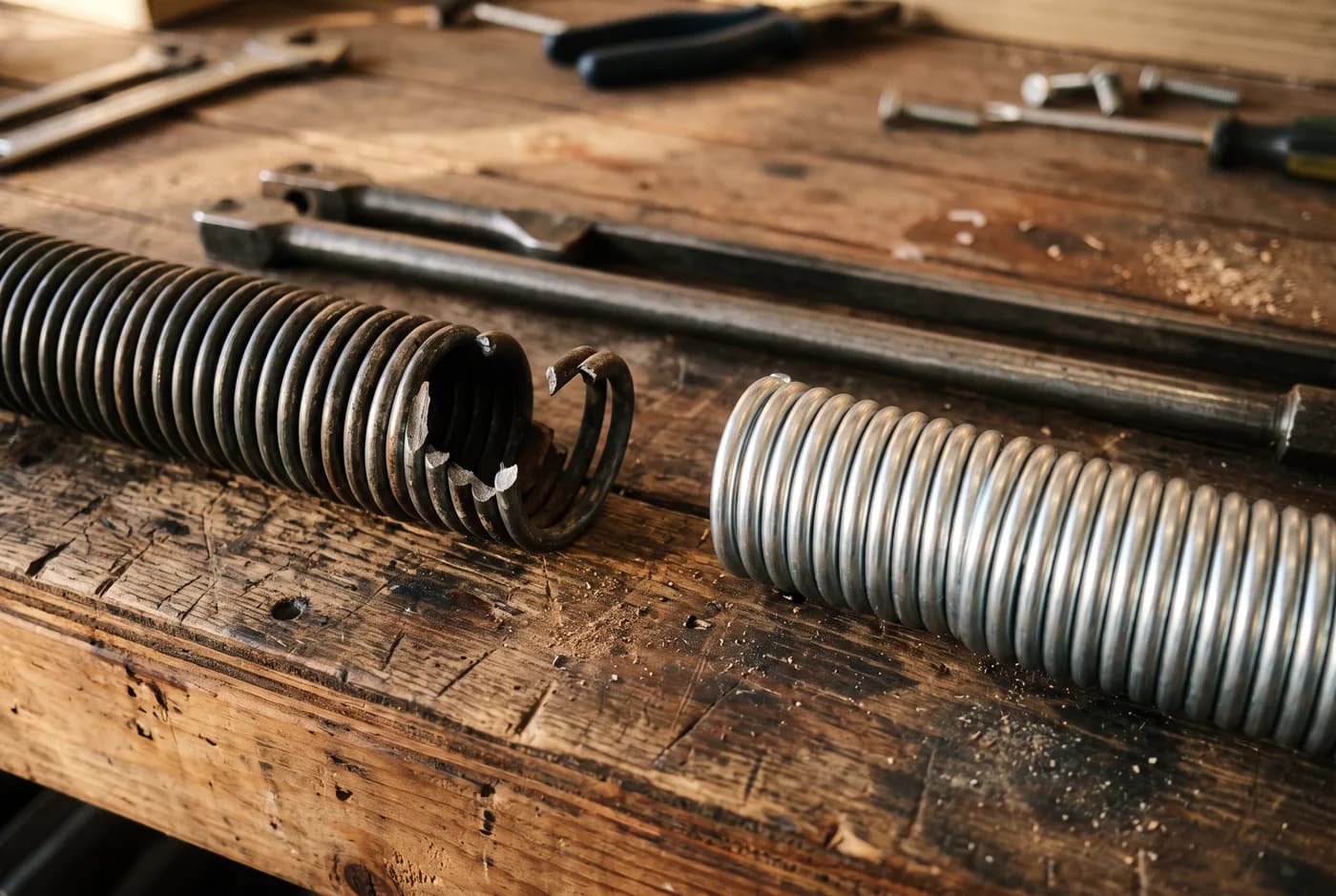
That was the spring breaking. Stop using the door.
- 06
Straining motor
An opener that groans is lifting a door the springs should be lifting — the spring, not the motor, is the problem.
Before you call
Safe to check before you call.
- 01
Where is the noise coming from?
Stand inside and listen as the door moves. Sides (rollers, hinges, guides), top (springs, drums), or the opener itself.
- 02
Does it happen by hand too?
With the opener disengaged, move the door by hand. If it’s still noisy, it’s the door. If it’s quiet, it’s the opener or its drive.
- 03
Look for the obvious
A loose bracket, a bolt on the floor, a roller that isn’t turning. Don’t tighten anything on the spring assembly.
A bang followed by a heavy door is a spring
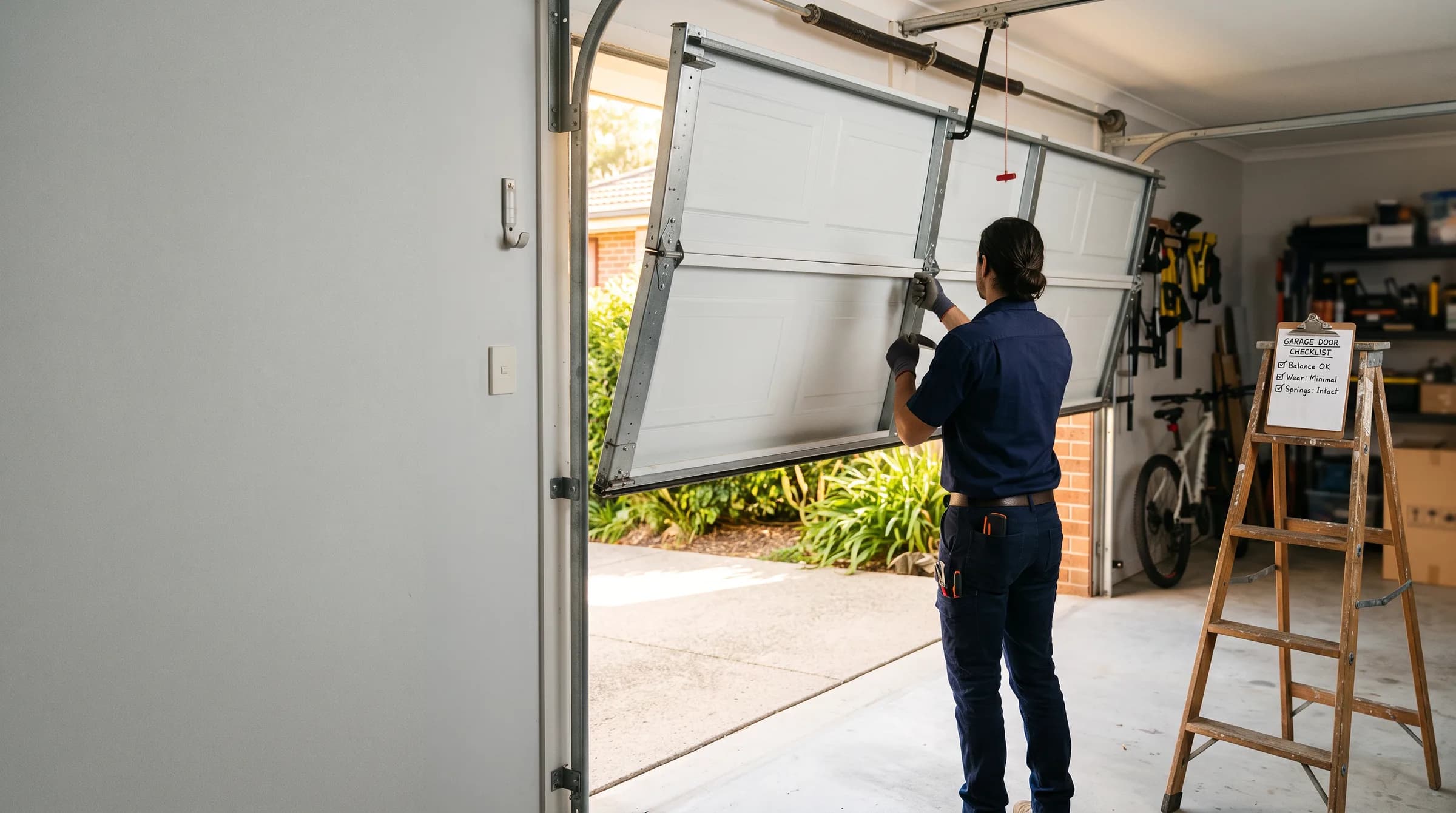
If the noise was one loud bang and the door is now hard to lift, the spring has broken. Don’t keep using it — call.
0408 190 595How we fix it
Usually a service, sometimes a part.
Rollers
the most common cause on sectional doors
1 hour
is typical for a noise-related service
Early
warning of the next failure
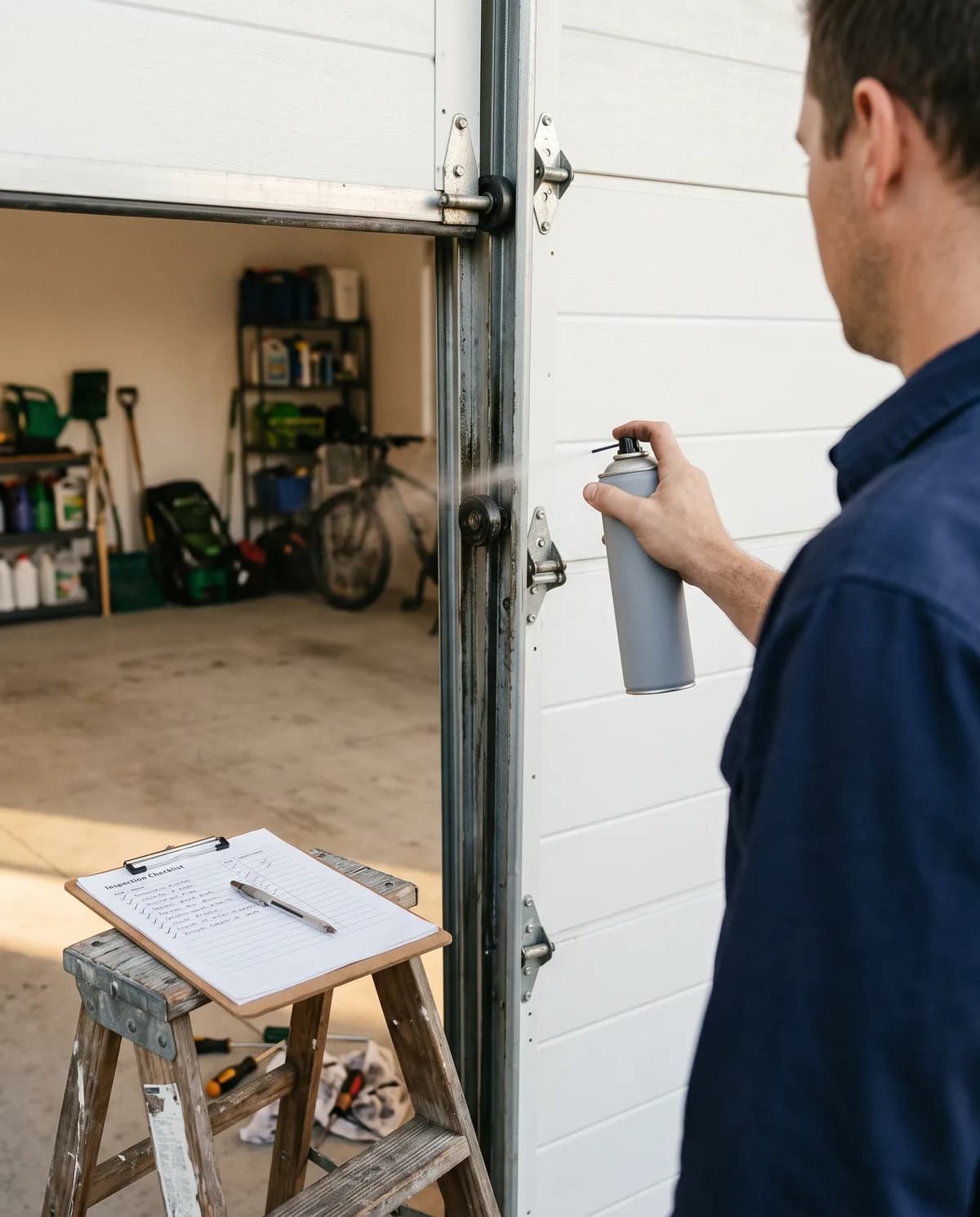
Most noisy doors are fixed with a proper service: the right lubricant on the right parts, hardware tightened, rollers and hinges replaced where they’re worn, and the opener adjusted. It’s one of the most satisfying jobs we do — an older door often goes from embarrassing to nearly silent in an hour.
Rollers make the biggest difference.
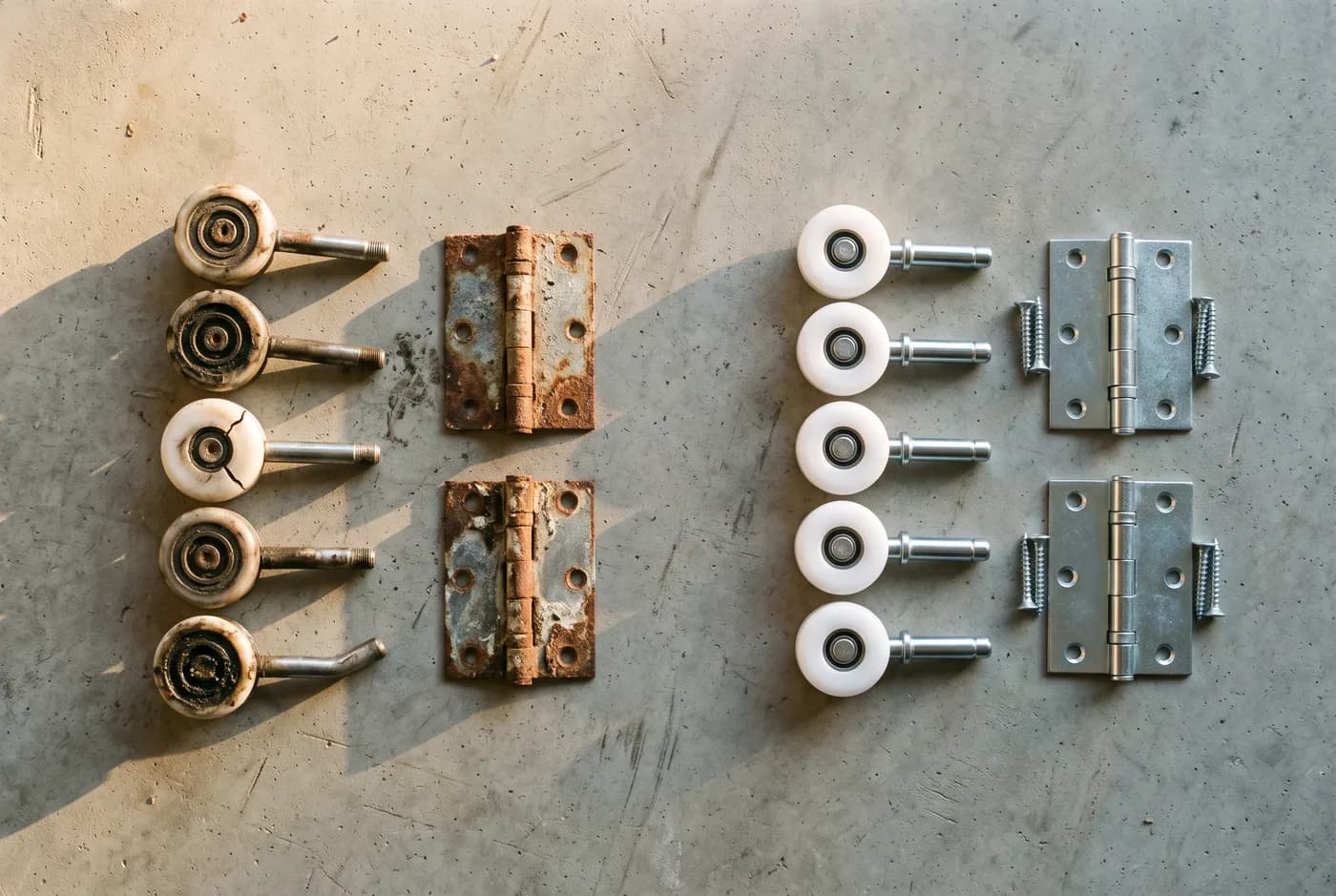
Cracked or seized nylon rollers are the usual culprit on sectional doors. A new set is inexpensive, on the van, and transforms how the door runs. Steel rollers on older doors can be swapped for nylon for a quieter door.
Noise is an early warning.
A door that has got louder is telling you something is wearing. Dealing with it now is cheaper than the spring, cable or opener failure it tends to precede.
Related
Also worth a look.
How it works
Straightforward from the first call.
- 01
Tell us what it’s doing
Call or send an enquiry. We'll ask how old the door is, what happened before the fault, and whether anything's been tried.
- 02
We inspect it properly
The whole door system — not just the part that looks broken. Developing wear gets pointed out, not hidden.
- 03
You get the price first
What's wrong, what needs doing now, what can wait. Then the price. No pressure to proceed.
- 04
Fixed, often on the spot
If parts are on the van, the repair is usually done the same visit. If not, we return promptly — generally within a couple of days.
Straight answers
Questions we get about this.
Can’t see yours? Ask on the phone — it’s usually a two-minute answer.
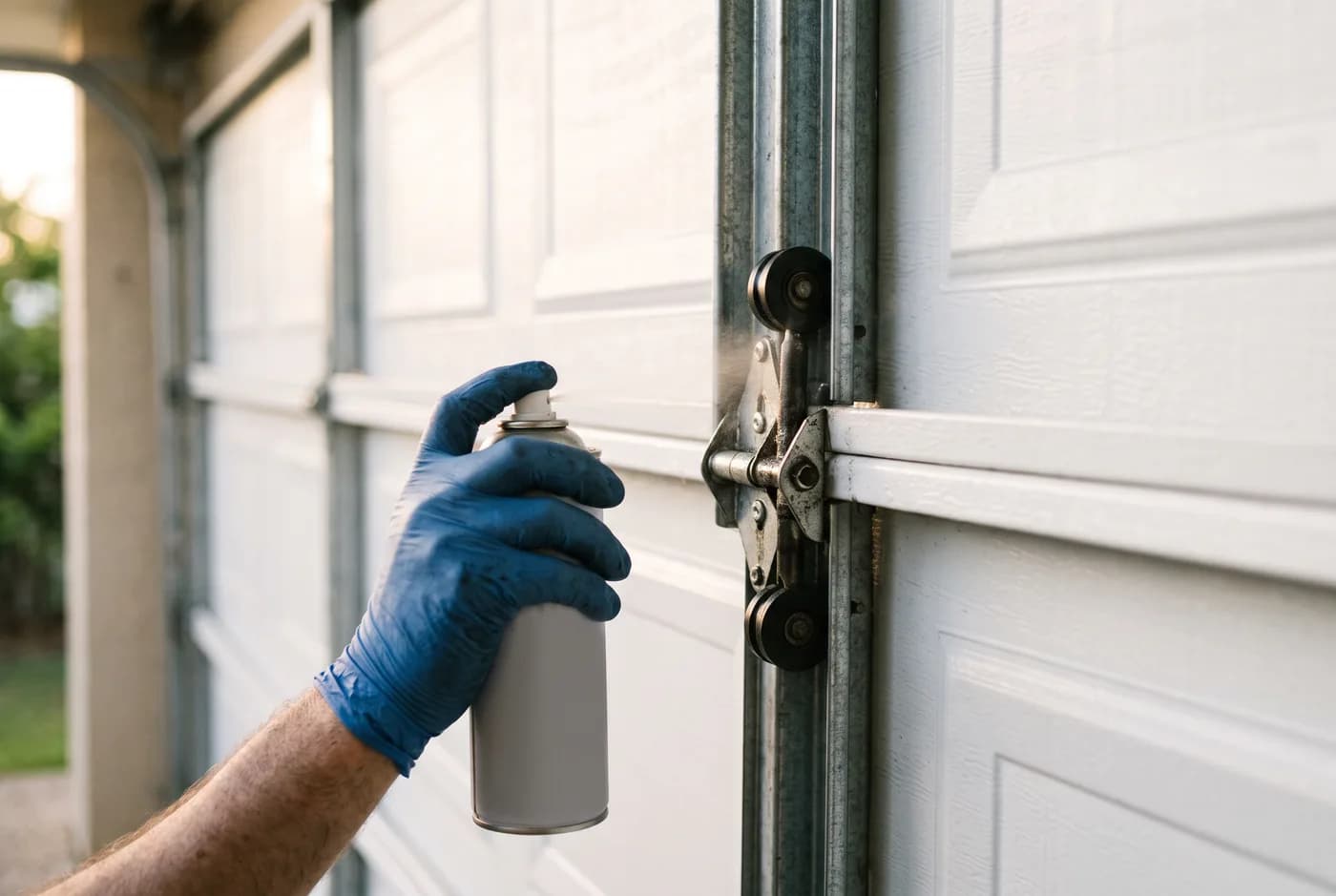
0408 190 595Please don’t — it’s a cleaner and water displacer, not a lubricant, and it strips what’s there. Garage doors need a proper garage door lubricant on the right parts, and none at all on some parts (the tracks, for example).
Get it sorted
Tell us what the door is doing.
Call for the quickest answer. Or send the details and we'll come back to you — a photo of the door helps.
Quickest answer0408 190 595- Brisbane northside to Caboolture, plus the bayside, southside and west
- Residential doors only
- Price before we proceed
- info@australiandoorman.com.au